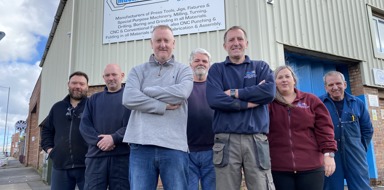


A specialist footwear manufacturer is preparing for its next phase of growth by modernising its production processes with the support of Made Smarter South East.
International Dance Shoes, based in Milton Keynes, is investing £70,000 in digitally enabled machinery and production planning to improve productivity, protect skilled jobs and strengthen its global competitiveness.
Working with Made Smarter South East, the family-run business has developed a digital roadmap that sets out how technology and new skills can support long-term growth while preserving its reputation for craftsmanship.

Founded in 1981, IDS is one of the UK’s last remaining specialist dance shoe manufacturers, producing ballroom and Latin footwear entirely in the UK for global export markets. The company employs around 30 skilled staff, who make 35,000 pairs of shoes a year, for customers across Europe, the United States, Australia and East Asia. It has also supplied footwear for Strictly Come Dancing since the programme’s first series.
Despite its success, the business faces pressures ,such as high labour costs, dwindling traditional shoemaking skills, and reliance on intensive manual processes in various production stages.
As the need for product diversity increases and demand grows from new markets such as theatre and live entertainment, IDS needs to improve productivity, reduce bottlenecks and secure workforce sustainability, without compromising quality.
Working with Jez Heys, a Made Smarter South East Technology Adoption Specialist, IDS completed a full review of its products, processes and workforce, resulting in a digital transformation roadmap.
As part of this plan, the company successfully applied for a match-funded £20,000 grant to invest in advanced toe-lasting and seat and side-lasting machinery. The equipment introduces programmable, digitally enabled production stages, allowing operators to input parameters such as shoe size, material type and insole design. This reduces reliance on scarce manual skills while enabling staff to upskill into machine operation, process oversight and data-supported roles.
The roadmap also explores wider workflow improvements, skills development and leadership capability, ensuring the business is prepared for future growth.
The investment is expected to increase output by around 10 percent, shorten lead times by up to a third and improve consistency and quality through greater production precision. Automating key stages of production will help IDS manage labour costs, maintain competitive pricing in global markets and reduce pressure caused by skills shortages.
The upgrade is also expected to upskill two existing staff into new roles and create up to three additional positions across the business.
Looking ahead, IDS plans to continue modernising its factory while keeping craftsmanship at the heart of its operation. By combining heritage shoemaking skills with digitally enabled manufacturing, the business aims to expand into new performance and entertainment markets and secure sustainable growth for the decades ahead.
Justin Patel, Managing Director, said: “Strictly is an important part of our story, but it is only one part of our future. Our long-term growth depends on diversification and on building a more digitally enabled production process that helps us stay competitive. Made Smarter is helping us explore what that future could be.”